

Direct Coaxial Cable Manufacturer vs. Wholesaler: Pros and Cons for 2026
For security system integrators, telecom operators, and commercial infrastructure developers, sourcing reliable cabling is a critical component of project planning in 2026. When purchasing bulk RG6 or RG59 lines, procurement teams often face a key decision: Should you buy direct from a coaxial cable manufacturer or source through a local wholesaler?
Understanding the pros and cons of each approach can significantly impact your project's budget, customization options, and overall network stability.
The Role of in 2026
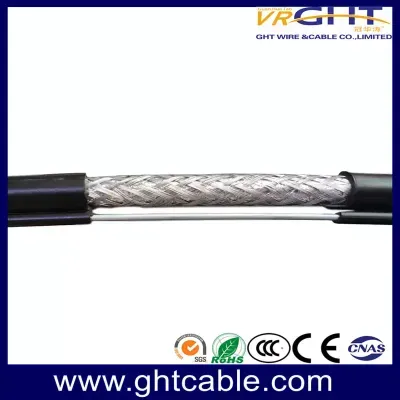
Despite the rapid growth of fiber optics, coaxial cables remain irreplaceable in specific applications. Their unique construction—featuring a center conductor surrounded by dielectric insulation, a metallic shield, and an outer jacket—provides exceptional resistance to Electromagnetic Interference (EMI).
With a standard 75-ohm impedance, coaxial cables are the backbone for:
- CCTV and Security Systems: Providing stable, low-latency video transmission for commercial security installers.
- Broadband and MATV: Delivering high-frequency signals for residential and commercial television networks.
- Smart Building Infrastructure: Integrating with specialized equipment designed by smart lighting manufacturers and industrial automation firms that require robust, closed-circuit signal routing.
Pros of Buying Direct from a Coaxial Cable Manufacturer
Choosing to partner directly with a source factory offers several distinct advantages for B2B buyers:
1. Factory-Direct Pricing
Wholesalers and distributors typically add a significant markup to cover their overhead and warehousing costs. By sourcing directly from a coaxial cable manufacturer, you effectively cut out the middleman, securing highly competitive pricing for bulk orders and improving your overall profit margins.
2. Strict Quality Control
When buying from a trader, tracing the exact origin and quality of the materials can be challenging. A direct manufacturer gives you transparency. You can specify and verify the exact materials used, such as the purity of the center conductor (Solid Copper vs. Copper-Clad Steel) and the precise percentage of the shielding braid (e.g., 60%, 90%, or 95% coverage) to meet your anti-interference requirements.
3. Deep OEM/ODM Customization
Wholesalers usually stock standard off-the-shelf products. However, complex projects often require tailored solutions. A capable manufacturer can provide comprehensive OEM/ODM services, including:
- Custom jacket materials (like UV-resistant PE for outdoor exposure or LSZH for indoor safety).
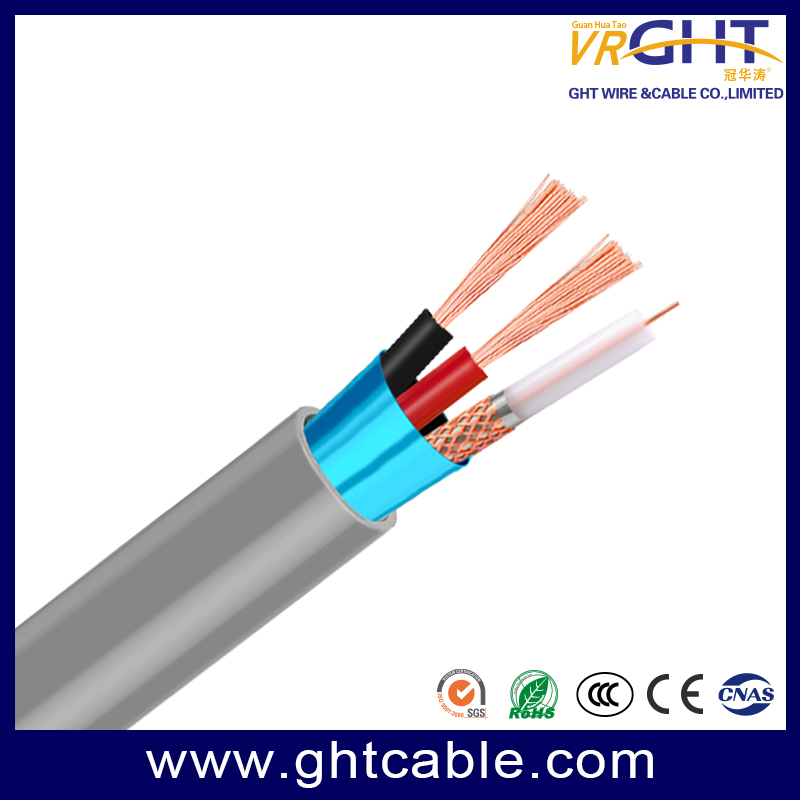
- Composite cables (such as RG59 with attached power wires for CCTV cameras).
- Customized printing on the jacket and branded packaging (wooden reels or pull boxes).
4. Reliable Lead Times for Bulk Orders
A factory controls its production schedule. For large-scale telecom deployments, a direct manufacturer can optimize their extrusion and braiding lines to ensure your bulk orders are completed and shipped on a predictable timeline.
Cons of Buying Direct
While the benefits are substantial, there is one primary challenge when dealing directly with factories:
Minimum Order Quantities (MOQs): Manufacturers optimize their costs through mass production, which often means they require a higher MOQ compared to local wholesalers who might sell by the single roll.
The Solution: Many forward-thinking factories, including GHT Cable, understand the needs of global buyers. We offer flexible policies for initial trial orders, allowing you to test our quality before committing to massive volumes.
Quick Comparison: Manufacturer vs. Wholesaler
|
Factor |
Direct Coaxial Cable Manufacturer |
Wholesaler / Distributor |
|
Pricing |
Highly competitive (Factory-direct) |
Higher (Includes markup) |
|
Customization |
Extensive OEM/ODM options |
Limited to standard stock |
|
Quality Control |
Transparent material selection |
Dependent on unknown factory sources |
|
MOQ |
Generally higher (with flexible options) |
Low (Available in small batches) |
|
Best For |
Bulk orders, Custom projects, Brands |
Urgent, small-scale local needs |
Partnering with GHT Cable: Your Direct Factory Solution
Finding a reliable partner can streamline your supply chain. GHT Cable operates as a professional source factory, offering a complete closed-loop production process for high-quality coaxial solutions.
We specialize in tailoring both RG6 (ideal for high-frequency broadband and TV) and RG59 (the standard for baseband CCTV installations) to your exact specifications. From raw material drawing to final impedance testing, our facilities are equipped to deliver consistent, enterprise-grade networking materials.
Frequently Asked Questions
Q1: What is the difference between RG6 and RG59?
A: RG6 has a thicker center conductor and better shielding, making it ideal for high-frequency applications like broadband internet and cable TV over longer distances. RG59 is thinner and more flexible, making it the preferred choice for shorter-distance, lower-frequency applications like analog CCTV security systems.
Q2: Can a manufacturer provide outdoor-rated coaxial cables?
A: Yes. A direct manufacturer can customize the cable with a Polyethylene (PE) jacket, which offers strong resistance to UV rays, moisture, and extreme temperatures, making it suitable for outdoor aerial or underground routing.


Leave a comment