

A Complete Guide to Sourcing from Fiber Optic Cable Suppliers in 2026
For enterprise network installers, data center operators, and smart city integrators, building a future-proof network infrastructure is a top priority in 2026. As bandwidth requirements escalate, sourcing reliable materials becomes the foundation of any successful project. Navigating the market to find reputable fiber optic cable suppliers can be complex, but partnering with the right manufacturer ensures your telecom infrastructure operates efficiently and securely.
This comprehensive guide will walk you through the essential steps to sourcing bulk fiber optic cables, covering everything from network evaluation to manufacturing capabilities.
Step 1: Understand Your Network Requirements
Before reaching out to fiber optic cable suppliers, it is crucial to clearly define your project's technical specifications. Different environments require distinct cable constructions.
Bandwidth and Speed: Are you building a standard enterprise LAN that requires 1Gbps to 10Gbps, or are you outfitting a hyperscale data center needing 100Gbps to 400Gbps transmission rates? Higher speeds often dictate the exact fiber standard (e.g., OM4/OM5 for multi-mode, OS2 for single-mode) you need to procure.
Transmission Distance: For short-distance indoor routing within server rooms, multi-mode fiber is highly cost-effective. However, for long-haul telecommunications or campus networks spanning several kilometers, single-mode fiber is mandatory to prevent signal degradation.
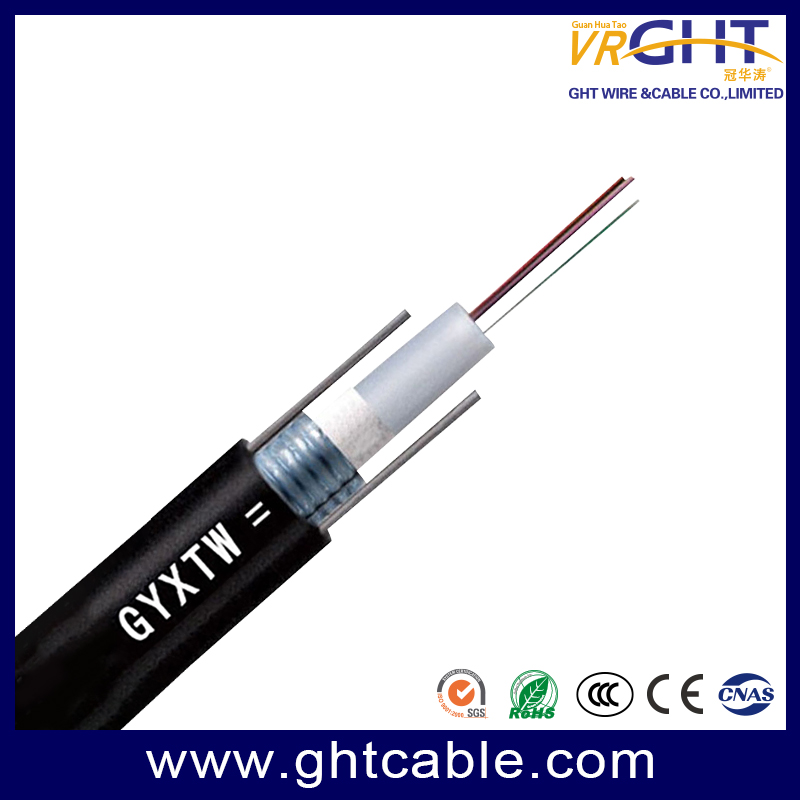
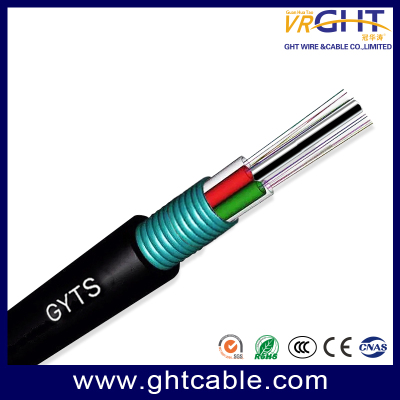
Environmental Factors: Will the cables be deployed indoors or outdoors? Outdoor applications require waterproof designs, such as loose-tube gel-filled cables or rugged armored constructions to protect against moisture and rodents.
Step 2: Evaluate the Supplier's Manufacturing Capabilities
Many companies claim to be fiber optic cable suppliers, but true quality control starts at the source. It is essential to distinguish between trading companies and direct manufacturers.
A reliable manufacturer should possess a complete production process—from fiber drawing and coloring to extrusion and final cabling. A factory-direct partner like GHT Cable offers significant advantages for B2B buyers. By managing the entire production cycle, GHT Cable provides customized OEM/ODM solutions tailored to specific engineering needs, ensuring consistent quality and flexible lead times for large-scale deployments.
Step 3: Check for Certifications and Testing
In B2B procurement, documented quality is non-negotiable. Even a minor defect in a fiber core can lead to massive network downtime. Leading fiber optic cable suppliers must provide comprehensive testing reports for every batch.
When evaluating a supplier, always ask for their testing protocols regarding:
- Insertion Loss (IL): Measures the loss of signal power resulting from the insertion of a cable or connector. Lower values indicate better performance.
- Return Loss (RL): Measures the amount of light reflected back to the source. High return loss ensures signal stability.
- Compliance: Ensure the products meet international standards such as ISO, RoHS, and CPR (Construction Products Regulation) for European markets.
Common Mistakes to Avoid When Choosing a Supplier
Even experienced buyers can overlook critical details during procurement. Here are two common pitfalls to avoid:
- Selecting the Wrong Jacket Material: Buyers sometimes choose standard PVC to cut costs, which is dangerous for indoor wiring. For indoor deployments, LSZH (Low Smoke Zero Halogen) is highly recommended to ensure safety during a fire. For outdoor waterproof applications, PE (Polyethylene) jackets provide excellent UV and moisture resistance.
- Ignoring Packaging Quality: Fiber optics are fundamentally made of glass and are highly fragile. Choosing a supplier that uses cheap, flimsy reels can result in micro-bending or breakage during international shipping. Always verify that your supplier uses robust wooden reels designed for safe ocean or air freight.
Quick Reference: Cable Jacket Materials
|
Jacket Material |
Primary Application |
Key Characteristic |
|
PVC |
General indoor use |
Cost-effective, standard flexibility |
|
LSZH |
Indoor routing, public buildings |
Emits low smoke and no toxic halogens when burned |
|
PE |
Outdoor waterproof routing |
High UV, moisture, and temperature resistance |
Frequently Asked Questions
Q1: Do fiber optic cable suppliers offer customized solutions for outdoor and indoor networks?
A: Yes. Direct manufacturers like GHT Cable can customize the core count, shielding type (e.g., corrugated steel tape armor), and jacket material to suit both indoor data centers and harsh outdoor environments.
Q2: How long is the typical lead time for bulk fiber optic cable orders?
A: Lead times vary by factory capacity and order volume. However, working directly with an integrated manufacturer usually shortens the timeline, often ranging from 2 to 4 weeks depending on customization requirements.


Leave a comment