

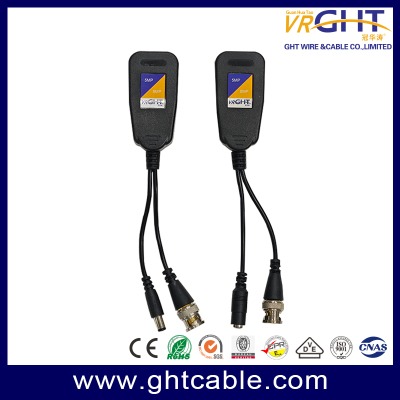
BNC vs. F-Type Connectors: What’s the Difference?
In coaxial cabling systems, connectors determine signal reliability, installation ease, and overall performance. BNC and F-Type connectors rank among the most widely used options, each engineered for specific demands in video, RF, and data transmission. This guide explores their distinctions, drawing on product expertise from GHT Cable.
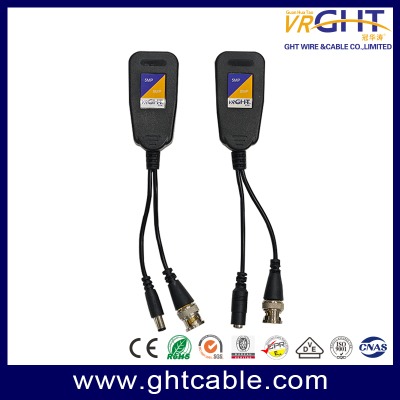
Understanding Coaxial Connectors
Coaxial cables shield signals from interference, but the terminating connector defines compatibility and efficiency. BNC connectors feature a bayonet-style lock, while F-Type connectors use threading. GHT Cable manufactures high-quality versions of both for applications ranging from CCTV to satellite TV.
What Is a BNC Connector?
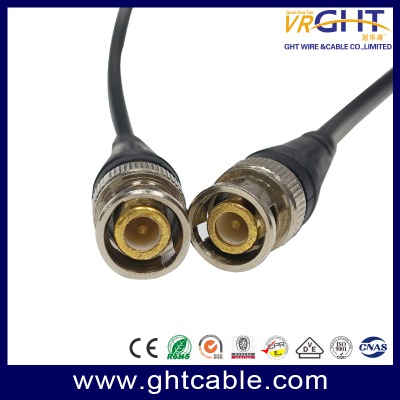
BNC connectors (Bayonet Neill-Concelman) attach to miniature coaxial cables for radio, television, and RF equipment. Their quick-twist locking mechanism ensures stable connections in professional environments.
Design and Key Features
These connectors support both analog and digital signals, making them versatile for video surveillance and test instruments. GHT Cable offers durable models like CT014, CT015, and CT022, compatible with RG58, RG59, and RG6 cables. Nickel-plated construction and gold-plated pins minimize loss and corrosion. The bayonet design allows technicians to make secure connections in seconds, reducing downtime in fast-paced environments such as control rooms or broadcast studios.
What Is an F-Type Connector?
F-Type connectors dominate cable television, satellite, and broadband installations. Their threaded design creates a secure, low-leakage connection ideal for high-frequency RF signals.
Design and Key Features
GHT Cable produces robust F-Type options such as CT007 and CT021, optimized for RG59 and RG6 cables in audio/video and CATV systems. These connectors deliver reliable performance with simple screw-on installation. The threading provides excellent resistance to pull-out forces and helps maintain signal integrity even in varying environmental conditions.
BNC vs. F-Type: Side-by-Side Comparison
Connectors must balance speed, stability, signal quality, and environmental resilience—qualities that vary significantly between BNC and F-Type designs.
Core Differences
BNC connectors prioritize quick, secure bayonet locking suited for professional video and dynamic setups, whereas F-Type connectors emphasize threaded stability for consumer broadcast and broadband applications. The table below summarizes the main distinctions:
|
Feature |
BNC Connector |
F-Type Connector |
|
Coupling Mechanism |
Bayonet (push and twist) |
Threaded (screw-on) |
|
Primary Applications |
CCTV, broadcasting, test equipment |
CATV, satellite TV, broadband |
|
Impedance |
50Ω or 75Ω |
Typically 75Ω |
|
Installation Speed |
Fast, secure lock |
Slightly slower but very stable |
|
Signal Strengths |
Excellent for video and SDI |
Superior for high-frequency RF |
|
Durability |
Strong mechanical hold |
Better weather resistance when sealed |
This comparison shows how each excels in its domain.
Key Advantages and Limitations
BNC connectors shine with rapid connect/disconnect cycles and strong vibration resistance, making them highly practical in dynamic professional setups such as security monitoring centers or laboratory testing stations. Their secure bayonet lock delivers consistent performance under movement or frequent handling, which helps maintain clear video feeds in demanding CCTV applications. On the limitation side, BNC connectors see less adoption in everyday consumer television equipment, where broader compatibility with home entertainment devices favors other standards.
F-Type connectors provide excellent widespread compatibility and cost-effectiveness, supporting large-scale residential distributions, satellite dish installations, and cable modem networks with minimal signal leakage. Their threaded design creates a tight, weather-resistant seal that performs reliably over long periods in both indoor and protected outdoor environments. However, the screw-on process takes slightly more time than bayonet styles, which can slow installations involving numerous connections. Despite this, their simplicity appeals to both professionals and DIY users.
Both types maintain strong signal integrity when properly matched to cable type and impedance. GHT Cable emphasizes quality testing, including high-voltage checks, for long-term reliability across their connector lines.
Choosing the Right Connector
Evaluate your project needs carefully. Opt for BNC in professional video surveillance or instrumentation where quick, locked connections matter most. Choose F-Type for satellite, cable TV, or broadband systems requiring threaded security and broad compatibility.
Hybrid installations often use both: BNC at camera ends and F-Type at distribution points. Consult detailed resources like GHT Cable’s guide, Is BNC Cable the Same as Coax Cable? for further context on coaxial systems.
Installation Best Practices
Prepare cables by stripping precisely to protect the center conductor. Use appropriate crimp or compression tools for secure terminations. Test every connection for continuity and low loss. For outdoor runs, apply sealing to enhance weatherproofing. Always match connector impedance to the cable and equipment to prevent reflections or distortion.
Following these steps ensures optimal performance whether using BNC or F-Type solutions from GHT Cable.
FAQs
Q: Can BNC connectors work for cable TV?
A: Yes, BNC connectors can technically function in some cable TV scenarios due to their RF capabilities and compatibility with coaxial cables. However, F-Type connectors remain the preferred industry standard for CATV systems because they offer better integration with consumer set-top boxes, distribution amplifiers, and widespread home infrastructure.
Q: Are F-Type connectors suitable for outdoor use?
A: F-Type connectors perform well in outdoor environments when properly sealed with weatherproof boots or tape, and many variants include enhanced moisture resistance. Their threaded design naturally helps create a tighter seal compared to some other connector types, making them reliable for satellite dishes and external antennas exposed to rain or humidity.
Q: Which cable pairs best with these connectors?
A: RG59 cables pair effectively with both for shorter CCTV or video runs where flexibility and adequate signal strength suffice, while RG6 cables excel in longer distances and higher bandwidth applications such as satellite or broadband due to lower attenuation. GHT Cable supplies premium choices in both RG59 and RG6 configurations, allowing users to match cable specifications precisely to their connector and performance needs.
Q: How do I switch between BNC and F-Type?
A: Quality BNC-to-F-Type adapters enable smooth transitions between the two connector types in hybrid systems. However, it is best to limit adapter use where possible, as each additional connection point can introduce minor signal loss or impedance mismatches. Direct cable assemblies with the appropriate factory-terminated connectors generally deliver superior long-term results.
Q: Which connector costs more?
A: In most cases, BNC and F-Type connectors have comparable pricing, especially when purchased in volume from reliable manufacturers. Factors such as material quality, plating, and packaging influence individual costs more than the connector type itself. Bulk options from GHT Cable help keep projects economical while ensuring professional-grade durability and performance.
Q: Do BNC connectors support HD video?
A: Absolutely—modern BNC connectors readily support high-definition video formats, including HD-SDI and even higher resolutions in professional broadcasting and surveillance equipment. Their stable locking mechanism and low-loss design help preserve signal clarity over extended cable runs, making them a trusted choice for demanding HD and 4K video applications.
Conclusion
BNC and F-Type connectors each serve distinct yet complementary roles in coaxial applications. BNC prioritizes speed and security in professional video, while F-Type emphasizes reliability in broadcast and residential setups. Selecting the right one optimizes system performance. Explore GHT Cable’s full range of high-quality connectors and cables for your next project and connect with confidence through proven, factory-direct solutions.


Leave a comment