

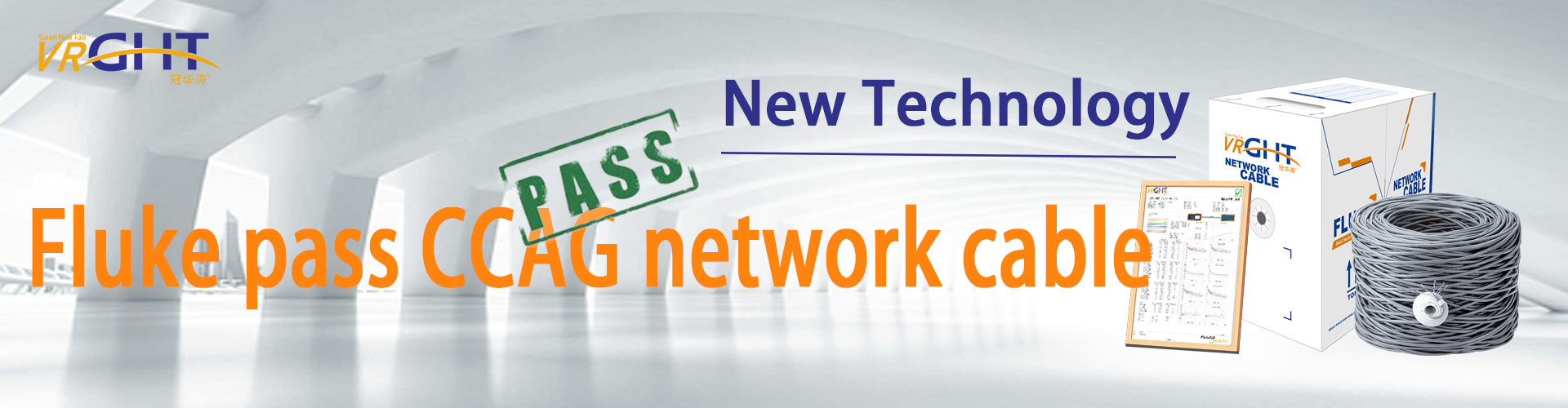
Data Cable Applications in Data Centers and Smart Buildings
Executive Summary
Physical layer infrastructure serves as the foundation for global digital transformation. Data cables deliver the essential connectivity that enables high-speed transmission, reliable communication, and efficient system integration across multiple sectors. Organizations depend on these solutions to maintain continuous operations while supporting increasing demands for bandwidth and performance.
This engineering analysis explores the primary types of data cables, their technical specifications, and their practical applications in data centers, industrial automation, and smart buildings. The discussion provides clear guidance for selecting cabling systems that balance performance requirements, environmental conditions, and long-term operational value.
Core Objectives and Scope
Successful cabling deployment requires careful attention to bandwidth needs, environmental challenges, and total lifecycle costs. This review maps specific cable categories to their most suitable environments in industrial, commercial, and enterprise settings. The analysis covers twisted pair copper cables, optical fiber solutions, and specialized assemblies, with detailed focus on their performance characteristics and deployment advantages.
Technical Classifications: Primary Types of Data Cables
Twisted Pair Copper Cables
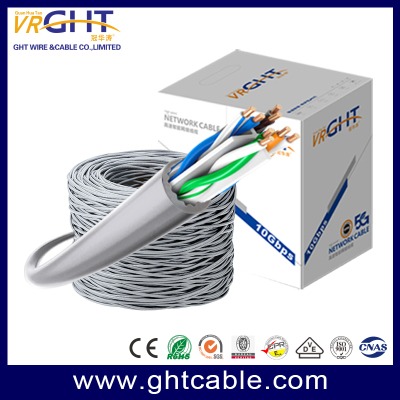
Twisted pair copper cables continue to play a central role in modern network infrastructure. Category 6A cables support 10 Gigabit Ethernet transmission over distances of up to 100 meters. These cables operate effectively at 500 MHz while maintaining strong resistance to crosstalk and external interference. Their 23 AWG solid copper conductors and precise twist rates ensure consistent signal quality in high-density installations.
Category 8 cables address applications that demand ultra-high frequencies over shorter distances. These solutions handle frequencies up to 2000 MHz within a 30-meter range, making them well-suited for localized high-speed connections between servers and switches.
Shielding options provide additional flexibility. Unshielded designs deliver cost-effective performance in standard office settings. Foiled and shielded configurations add protective layers that reduce electromagnetic interference in more challenging environments.
Optical Fiber Waveguides
Optical fiber transmits data through light signals, offering excellent speed and distance capabilities. Multi-mode fiber variants such as OM3, OM4, and OM5 support cost-effective laser transmission for short to medium distances. OM4 and OM5 types enable 40G and 100G connections across hundreds of meters, providing strong performance for building backbones and campus environments.
Single-mode fiber, particularly OS2 grade, delivers extremely low attenuation for long-distance applications. These cables maintain signal strength over tens of kilometers, forming reliable foundations for core network and wide-area connections.
Direct Attach Copper Assemblies and High-Frequency Coaxial Solutions
Twinaxial Direct Attach Copper cables provide efficient short-range connections for intra-rack equipment. These assemblies support high data rates with low power consumption and minimal latency, which makes them valuable in dense data center configurations.
Industrial coaxial cables maintain relevance in specialized monitoring and legacy radio frequency systems. Their robust shielding designs ensure stable performance in environments with specific transmission requirements.
Industry-Specific Deployment Matrices
Data Center Environments
Data centers operate under strict requirements for high density, low latency, and thermal efficiency. Cabling systems must optimize space usage within containment pathways while preserving essential airflow for cooling systems.
Design teams implement single-mode OS2 and multi-mode OM4/OM5 trunk lines to create high-capacity backbone connections. These fiber solutions deliver substantial bandwidth with efficient power usage. Direct Attach Copper assemblies connect servers to switches at rack level, streamlining management and reducing transmission delays.
Smart Buildings and Enterprise Spaces
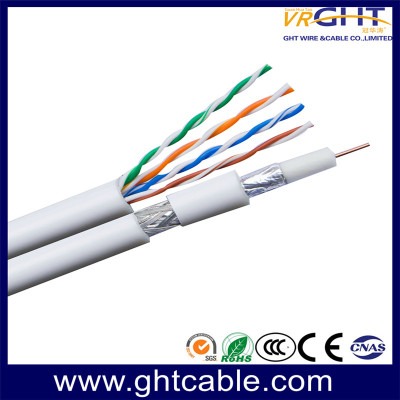
Smart buildings integrate data, automation, and power delivery through unified infrastructure. Power over Ethernet technology allows single cables to carry both data and electrical power to devices such as wireless access points, intelligent lighting, and security systems.
Category 6A solid copper cables lead in these environments. They manage simultaneous high-speed data transfer and higher power loads while controlling heat buildup in bundled installations. These cables provide the performance headroom needed for evolving building technologies.
Safety standards receive careful attention. Plenum-rated and Low-Smoke Zero-Halogen jacket materials help facilities meet fire safety regulations and environmental requirements in occupied spaces.
Industrial Automation and Manufacturing Facilities
Manufacturing floors present demanding conditions including electromagnetic noise, mechanical vibration, temperature variations, and potential moisture exposure. Cabling must resist interference from heavy machinery, variable frequency drives, and nearby power lines.
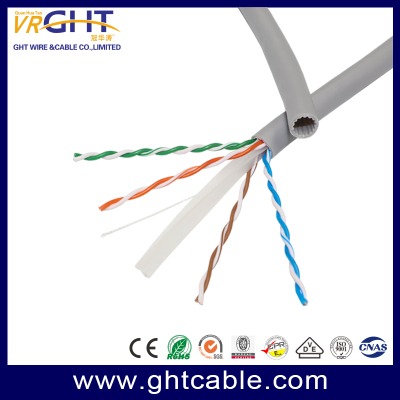
Heavily shielded twisted pair cables and optical fiber solutions deliver dependable performance in these settings. Optical fiber provides complete electrical isolation, which protects control systems from surges and ground potential differences. Ruggedized constructions maintain data integrity throughout extended operational periods.
Cross-Industry Selection Matrix
The following performance comparison assists in matching cable types to project needs:
- Category 6A: 10 Gbps transmission speed, 100 meters maximum distance, strong EMI resilience with shielding, full Power over Ethernet support, ideal for enterprise and smart building deployments.
- OM4/OM5 Multi-mode Fiber: 40/100 Gbps speeds, 400 meters plus reach, complete EMI immunity, backbone applications in data centers.
- OS2 Single-mode Fiber: 100 Gbps and higher, multi-kilometer distances, excellent for long-haul core networks.
- Twinaxial DAC: 40/100 Gbps over short distances, optimized for low-latency intra-rack connections.
This structured evaluation supports informed decisions based on speed, distance, environmental resilience, and power delivery requirements.
Financial Analysis and Strategic Future-Proofing
Copper-based solutions typically present lower initial material costs, while optical fiber systems offer extended service life with reduced maintenance needs. Organizations evaluate total ownership costs by considering both upfront investments and long-term operational savings from decreased downtime and simplified upgrades.
Scalable cabling designs prepare facilities for future technology advancements. Structured pathways allow incremental improvements without major structural modifications, protecting initial investments while supporting evolving performance demands. Premium manufacturing standards contribute to consistent quality and extended reliability across diverse applications.
Conclusion
The careful selection of data cables tailored to specific industry conditions directly determines network uptime, overall performance, and operational efficiency. Organizations that match cable solutions precisely to their technical and environmental requirements establish resilient foundations for long-term digital success.
As a leading manufacturer of high-performance cabling solutions, GHT specializes in premium material engineering that delivers exceptional structural reliability, superior signal integrity, and future-ready performance across critical enterprise applications. Choose GHT cables to secure your network infrastructure with proven quality and technical excellence. Contact our team today to discover the right cabling solutions for your next project.
FAQs
Q: What is the main difference between Cat6A and fiber optic cables?
A: Cat6A copper cables excel in supporting 10 Gbps Ethernet over 100 meters while simultaneously delivering Power over Ethernet, making them highly practical for smart buildings and enterprise networks. Fiber optic cables provide superior bandwidth, longer transmission distances, and complete immunity to electromagnetic interference, which makes them the preferred choice for data center backbones and long-haul connections.
Q: Which type of data cable is best for data centers?
A: Modern data centers typically use a combination approach. OM4 or OM5 multi-mode fiber serves as the high-density backbone, while OS2 single-mode fiber handles longer core links. Twinaxial DAC cables provide low-latency server-to-switch connections within racks. This hybrid strategy achieves optimal performance, density, and thermal efficiency.
Q: How should I choose cabling for smart building projects?
A: For smart buildings, Category 6A solid copper cables stand out as the primary recommendation. They support high-speed data, high-power PoE delivery, and future technology upgrades within a single unified infrastructure. Selecting plenum-rated or LSZH jackets ensures compliance with fire safety and environmental standards in occupied spaces.
Q: Are shielded cables necessary for industrial environments?
A: Yes, heavily shielded twisted pair cables or optical fiber solutions deliver the best results in industrial settings. These cables effectively resist electromagnetic noise from machinery and power lines, maintain signal integrity, and provide the mechanical durability required for harsh operating conditions.
Q: How can I future-proof my network cabling investment?
A: Choose cables with performance headroom beyond current requirements, such as Cat6A for copper runs and OM5 fiber for optical links. Implement structured cabling systems with expandable pathways to support upgrades without major reconstruction. High-quality solutions from established manufacturers ensure longer service life and lower total ownership costs.


Leave a comment