

Shielded vs Unshielded Cables: Industrial EMI Protection Guide
Networks in industrial settings face constant threats from interference. Industrial Ethernet cables must deliver reliable performance. Shielded options provide strong EMI protection. Unshielded cables suit quieter areas. This guide helps engineers and managers choose wisely.
Understanding Shielded and Unshielded Cables in Industrial Settings
Industrial Ethernet cables work in noisy factory environments. Unshielded versions use twisted pairs only. They stay flexible and cost less. Yet they struggle with heavy electrical noise. Shielded cables add foil or braid layers for better defense.
GHT Cable makes both types. Their FTP and SFTP models target industrial needs. These cables maintain signal strength. They reduce crosstalk effectively. Teams trust them for daily operations.
Key Differences: Construction and Performance
Unshielded industrial Ethernet cables lack extra layers. This design works in low-interference spots. Shielded versions wrap pairs in foil. Some add overall braids too. The result is superior EMI protection near machinery.
Shielded cables cut noise impact. They support higher speeds over distance. GHT Cable ensures quality across categories. Engineers see fewer errors. Procurement managers note long-term savings.
Construction Comparison Table
|
Feature |
Unshielded (U/UTP) |
Shielded (FTP/SFTP) |
|
Construction |
Twisted pairs only |
Foil or braid layers |
|
EMI Protection |
Basic |
Strong |
|
Flexibility |
High |
Moderate |
|
Best Use |
Low noise areas |
High interference industrial zones |
|
GHT Cable Examples |
Indoor U/UTP Cat6A |
Indoor SFTP CAT6A, FTP Cat6A |
The Role of EMI Protection in Industrial Ethernet Cables
EMI protection keeps data flowing in tough conditions. Motors and power lines create constant noise. Shielded industrial Ethernet cables block this interference. Foil and braid layers reflect unwanted signals. GHT Cable designs excel here.
These cables prevent packet loss. They support automation systems well. Strong shielding boosts uptime. Technical teams value the stability. It fits modern industrial demands perfectly.
Advantages for Corporate Engineers and Technical Teams
Shielded cables deliver clean signals. They handle 10Gbps in noisy zones. Unshielded options save money initially. Shielded versions cut maintenance needs. EMI protection becomes a clear advantage.
Performance Benefits Overview
Shielded designs reduce crosstalk. They maintain signal integrity. Unshielded cables offer simplicity. Both serve specific industrial roles through GHT Cable solutions.
Choosing the Right Cable: Shielded vs. Unshielded for Your Needs
Evaluate your site first. High EMI areas need shielded industrial Ethernet cables. Lower noise spots allow unshielded models. GHT Cable offers suitable choices for both. Match cable type to risks. This step avoids future problems.
Factors Influencing Selection
Check proximity to power sources. Consider required speeds and distances. Budget plays a role too. Shielded Cat6A provides strong EMI protection. GHT Cable products meet industrial standards reliably.
Selection Factors Table
|
Selection Factor |
Recommendation for Shielded |
Recommendation for Unshielded |
|
EMI Levels |
High (factories, machinery) |
Low (office-like industrial zones) |
|
Speed Needs |
10Gbps over distance |
1Gbps in short runs |
|
Environment |
Outdoor or noisy |
Indoor, controlled |
|
GHT Cable Options |
SFTP CAT6A, Outdoor FTP |
U/UTP Cat6, Cat6A |
Proper Grounding: Unlocking Full EMI Protection Potential
Grounding activates shielding fully. It directs noise to earth safely. Without it, shields may collect interference. GHT Cable stresses correct methods. Follow proven steps for success.
Why Grounding Matters for Shielded Industrial Ethernet Cables
Proper grounding stops ground loops. It protects equipment from surges. Industrial Ethernet cables perform best this way. Drain wires connect easily in GHT models. Teams achieve stable networks.
Grounding Benefits
Grounding dissipates collected noise. It prevents new interference issues. Correct practices extend cable life. GHT Cable products support easy implementation.
Step-by-Step Grounding Process
Prepare tools and survey the site. Route cables with care. Terminate with full shield contact. Connect at the main panel first. Test continuity afterward. Repeat checks regularly.
Common Pitfalls to Avoid
Never skip grounding entirely. Avoid creating loops at both ends. Secure all connections tightly. Match methods to cable type. These steps preserve EMI protection.
Pitfalls and Solutions
|
Common Error |
Effect |
Solution from GHT Practices |
|
Skipping Grounding |
Shield acts as antenna |
Connect drain wire at main panel |
|
Ground Loops |
Voltage differences damage gear |
Use single-end grounding primarily |
|
Loose Terminations |
Breaks continuity |
Ensure 360-degree shield contact |
GHT Cable Solutions for Industrial Applications
GHT Cable produces reliable industrial Ethernet cables. Their shielded lines target EMI challenges. FTP and SFTP options deliver results. Unshielded models offer flexibility where needed. All meet strict quality checks.
Featured Shielded Options
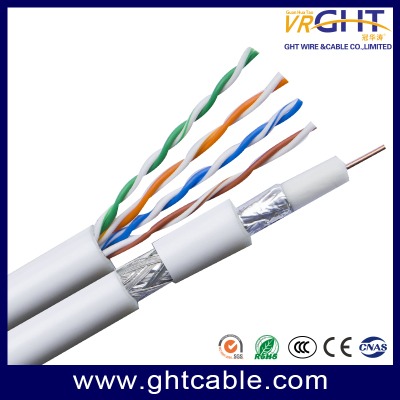
Indoor SFTP CAT6A handles high noise. FTP Cat6A suits moderate interference. Outdoor versions add weather resistance. These provide excellent EMI protection. Engineers rely on their consistency.
Unshielded Alternatives
U/UTP Cat6 and Cat6A work in controlled areas. They remain easy to install. GHT Cable ensures performance across the range. Procurement teams appreciate the options.
Product Comparison Table
|
GHT Cable Product |
Type |
Key Benefit for EMI Protection |
Typical Application |
|
Indoor SFTP CAT6A |
Shielded |
Full foil and braid |
High noise industrial zones |
|
Indoor FTP Cat6A |
Shielded |
Foil per pair |
Moderate interference areas |
|
Indoor U/UTP Cat6A |
Unshielded |
Cost effective in low EMI |
Controlled indoor settings |
|
Outdoor FTP CAT6E |
Shielded |
Weather resistant shielding |
External industrial runs |
Best Practices for Deployment and Maintenance
Keep network cables away from power lines. Use proper trays for support. Ground panels as part of the system. Test installations professionally. Inspect regularly for best EMI protection.
Deployment Guidelines
Separate cables properly. Support them adequately. These habits enhance overall performance in industrial settings.
Maintenance Tips
Perform regular inspections. Verify grounding continuity. Address issues promptly. GHT Cable products maintain reliability with these steps.
Combine shielding with good habits. This approach supports Industry 4.0. GHT Cable products thrive under these conditions.
FAQ
Q: When should I choose shielded industrial Ethernet cables?
A: Choose shielded industrial Ethernet cables in high-EMI factory areas where motors, power lines, and heavy machinery generate significant interference. These cables offer superior EMI protection through foil and braid layers that block external noise. They help maintain stable data transmission and reduce packet loss. GHT Cable's FTP and SFTP models perform reliably in such demanding conditions. Proper selection prevents costly downtime in industrial operations.
Q: How important is grounding?
A: Grounding is essential for shielded industrial Ethernet cables. It directs collected interference safely to earth and maximizes EMI protection. Without proper grounding, shields may pick up noise instead of blocking it. GHT Cable recommends connecting drain wires at the main panel to avoid ground loops. This practice protects equipment and ensures consistent network performance across industrial sites.
Q: Do GHT Cable options support high speeds?
A: Yes. GHT Cable shielded Cat6A models support 10Gbps speeds even in noisy industrial environments. Their advanced shielding delivers strong EMI protection over full distances. These cables maintain signal integrity for automation and monitoring systems. Engineers benefit from reduced errors and reliable high-speed connectivity. GHT Cable ensures these options meet strict performance standards.
Q: Are unshielded cables suitable industrially?
A: Yes. Unshielded industrial Ethernet cables suit low-noise industrial zones such as controlled indoor areas with minimal electrical interference. They provide good flexibility and lower costs while supporting standard speeds. GHT Cable's U/UTP Cat6 and Cat6A variants work well in these settings. They remain easy to install and handle everyday network demands effectively.
Q: What stands out about GHT Cable?
A: GHT Cable stands out with quality shielding and easy grounding features in their industrial Ethernet cables. Products include consistent foil quality and reliable drain wires that simplify installation. They offer both shielded and unshielded options backed by certifications for industrial use. The focus on EMI protection helps teams achieve stable networks. GHT Cable delivers trusted performance for procurement managers and engineers.
Conclusion
GHT Cable stands as a trusted leader in high-quality industrial Ethernet cables with superior EMI protection. Our factory-direct solutions combine advanced shielding, certifications, and expert design for demanding industrial environments. Choose GHT Cable for unmatched reliability and performance. Contact us today to secure the ideal cables for your next project and strengthen your network infrastructure.


Leave a comment