

Understanding RCA Cables: A Comprehensive Guide
In this post, we will explore what RCA cables are, their purposes, the ideal material for their construction, the difference between RCA and aux cables, and the necessity of a ground wire for RCA connections. We will also cover common types, comparison with HDMI, and practical tips for choosing the right cable.
What RCA Cable Means?
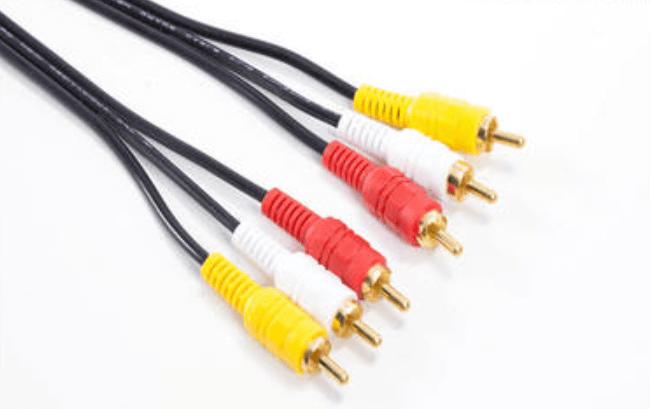
RCA stands for "Radio Corporation of America," the company that first introduced this type of cable in the 1940s. An RCA cable typically consists of three color-coded connectors on each end, known as RCA connectors, allowing for the transmission of audio and video signals between various devices. The common form of these cables is often referred to as a 3RCA to 3RCA cable, which features three male RCA connectors on each end for easy and standardized connection.
What Are the 3 RCA Cables for?
RCA cables are predominantly used for analog audio and video connections. The three cables are typically color-coded as follows:
- Red connector: This represents the right audio channel.
- White (or black) connector: Represents the left audio channel.
- Yellow connector: Transmits composite video signals.
By utilizing these three connectors, a 3RCA to 3RCA cable enables the transfer of both audio and video signals simultaneously, making them ideal for connecting devices such as DVD players, gaming consoles, TVs, amplifiers, and more.
Common Types of RCA Cables
Besides the classic 3RCA (composite) cable, there are several common variations:
|
Type |
Connectors |
Main Use |
Typical Application |
|
2RCA to 2RCA |
Red + White |
Stereo audio only |
Amplifiers, speakers, audio systems |
|
3RCA to 3RCA |
Red + White + Yellow |
Audio + Composite video |
DVD players, older TVs, game consoles |
|
3RCA to HDMI |
Adapter style |
Convert analog to digital |
Connecting old devices to modern TVs |
|
Single RCA |
One connector |
Mono audio or subwoofer |
Subwoofers, specific audio channels |
Understanding these types helps you choose the correct cable for your setup.
What Material is Best for RCA Cables?
The choice of material for RCA cables can significantly impact their performance and durability. High-quality RCA cables often feature the following characteristics:
- Copper conductors: Copper is an excellent conductor of electrical signals and is commonly used in RCA cables for its low resistance.
- Gold-plated connectors: Gold plating on RCA connectors helps minimize signal loss and corrosion, ensuring optimal signal transmission.
- Shielding: Quality RCA cables often have multiple layers of shielding to protect against interference and noise, ensuring clean and clear signals.
Is RCA Cable the Same As Aux Cable?
No, RCA cables and aux cables are not the same. While both are used for audio connections, they differ in terms of their connectors and purposes.
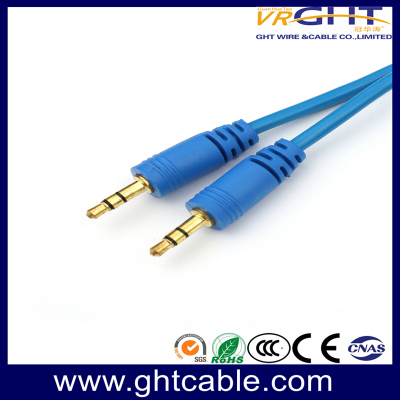
RCA cables, as mentioned earlier, are primarily used for analog audio and video signals, utilizing RCA connectors. In contrast, aux cables (also known as auxiliary cables or 3.5mm cables) are designed for connecting audio devices, such as smartphones, MP3 players, or laptops, to external speakers or headphones. Aux cables typically have a 3.5mm TRS (tip-ring-sleeve) connector on both ends.
RCA vs HDMI: When Should You Use Which?
Although HDMI has become the standard for modern high-definition video and multi-channel audio, RCA cables still have important uses:
- Use RCA when connecting older devices (DVD players, VCRs, older game consoles, analog amplifiers).
- Use HDMI for 1080p/4K video, digital audio, and single-cable convenience.
- Many users still need RCA for audio-only connections or when working with professional/legacy equipment.
In short, RCA remains essential for analog systems and compatibility, while HDMI is preferred for pure digital high-definition setups.
Does RCA Need Ground Wire?
In most cases, RCA cables do not require a separate ground wire. The outer metal shield of an RCA cable acts as a ground connection, providing protection against external interference.
This shielding is typically sufficient to maintain a reliable signal and prevent ground loop issues. However, in certain specialized audio setups, where ground loops may be a concern, additional measures like ground lifters or isolators may be used to mitigate potential problems.
How to Choose a High-Quality RCA Cable
When selecting an RCA cable, consider the following practical points:
1. Conductor material – Pure copper is better than copper-clad aluminum (CCA).
2. Connector quality – Gold-plated connectors resist corrosion and provide better contact.
3. Shielding – Look for double or triple shielding if the cable will run near power lines or other interference sources.
4. Length – Use the shortest length that meets your needs to reduce possible signal loss.
5. Build quality – A flexible yet durable jacket makes installation easier and longer-lasting.
Choosing a well-made RCA cable from a reliable manufacturer ensures better signal integrity and longer service life.
Conclusion
RCA cables have been a trusted means of transmitting audio and video signals for many years. Understanding their purpose, the role of the three cables, the ideal materials for construction, the difference between RCA and aux cables, and the necessity (or lack thereof) of a ground wire helps in making informed decisions when setting up audio or video systems.
By using high-quality 3RCA to 3RCA cables and paying attention to proper connections with reliable RCA connectors, you can enjoy a seamless audio and video experience in your home entertainment setup. Whether you need classic composite video, stereo audio, or compatibility with older equipment, a good RCA cable remains a practical and cost-effective solution.


Leave a comment